Piano Opera in 4 Acts · 2024–2025

The Asteroidal Sequence of Metaphysical Ulysses

Composer
H. Naito
Instrumentation
3 Microtonal Pianos
Tuning
51 notes per octave
Structure
13 Movements · 4 Acts
I
Prometheus
Published 2024.12.31
I. · 4132
Bartok
II. · 1814
Bach
III. · 2168
Monteverdi
I.4132
Bartok
RecitativoPiano 1 · 0:00
BarbaroTrio · 1:45

Bela Bartok (1881-1945), as Romantic harmony reached its impasse, took a revolutionary approach, treating the piano not as a melodic instrument but as a percussive one. The relentless pounding of dissonances, pentatonic scales, and the asymmetric, violent accents native to peasant music struck Western European audiences as literally "barbaro." Later scholarship revealed that the number of notes and bar divisions in his works encode strict mathematical structures, including Fibonacci sequences and golden-section proportions.

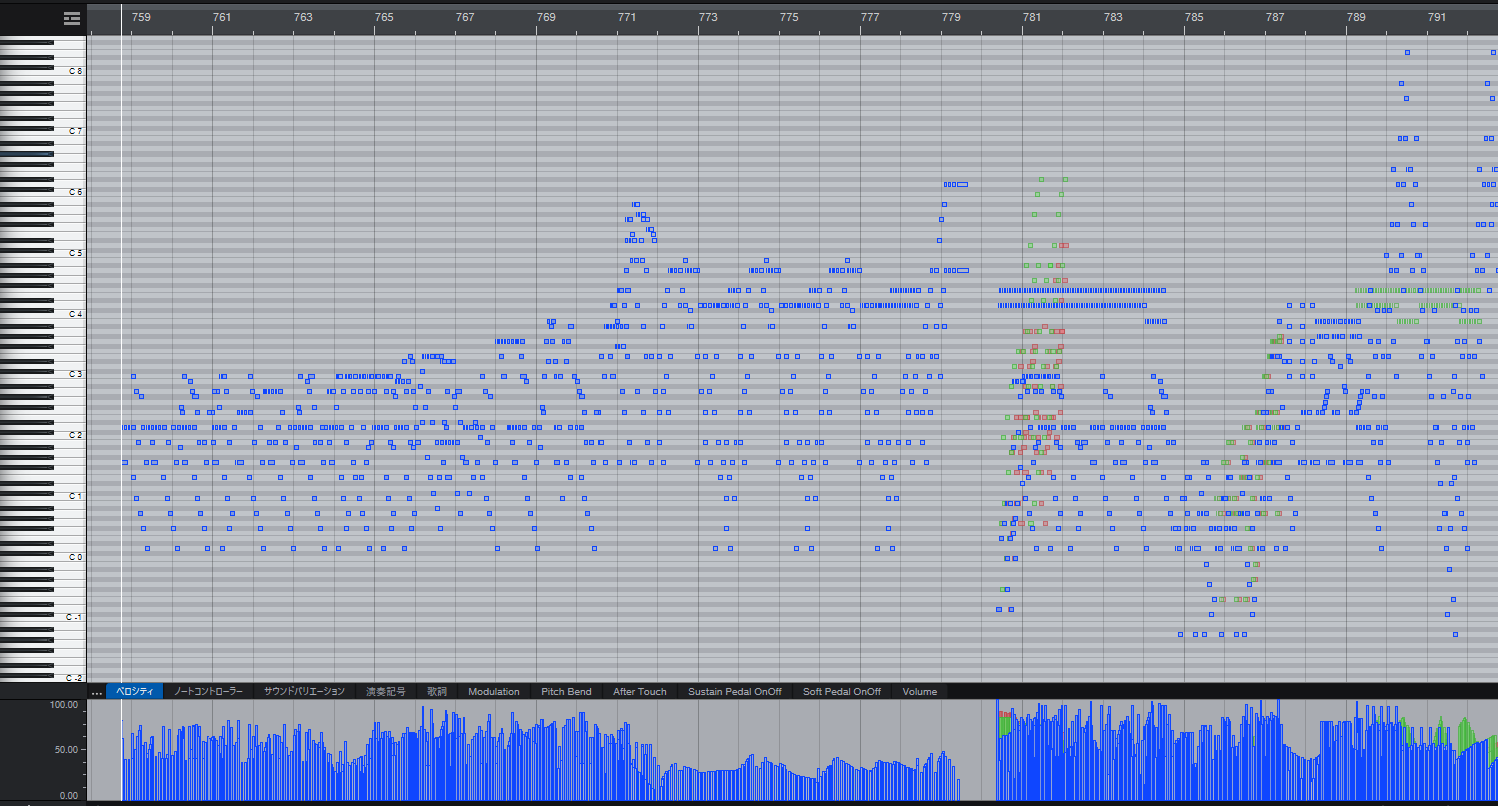
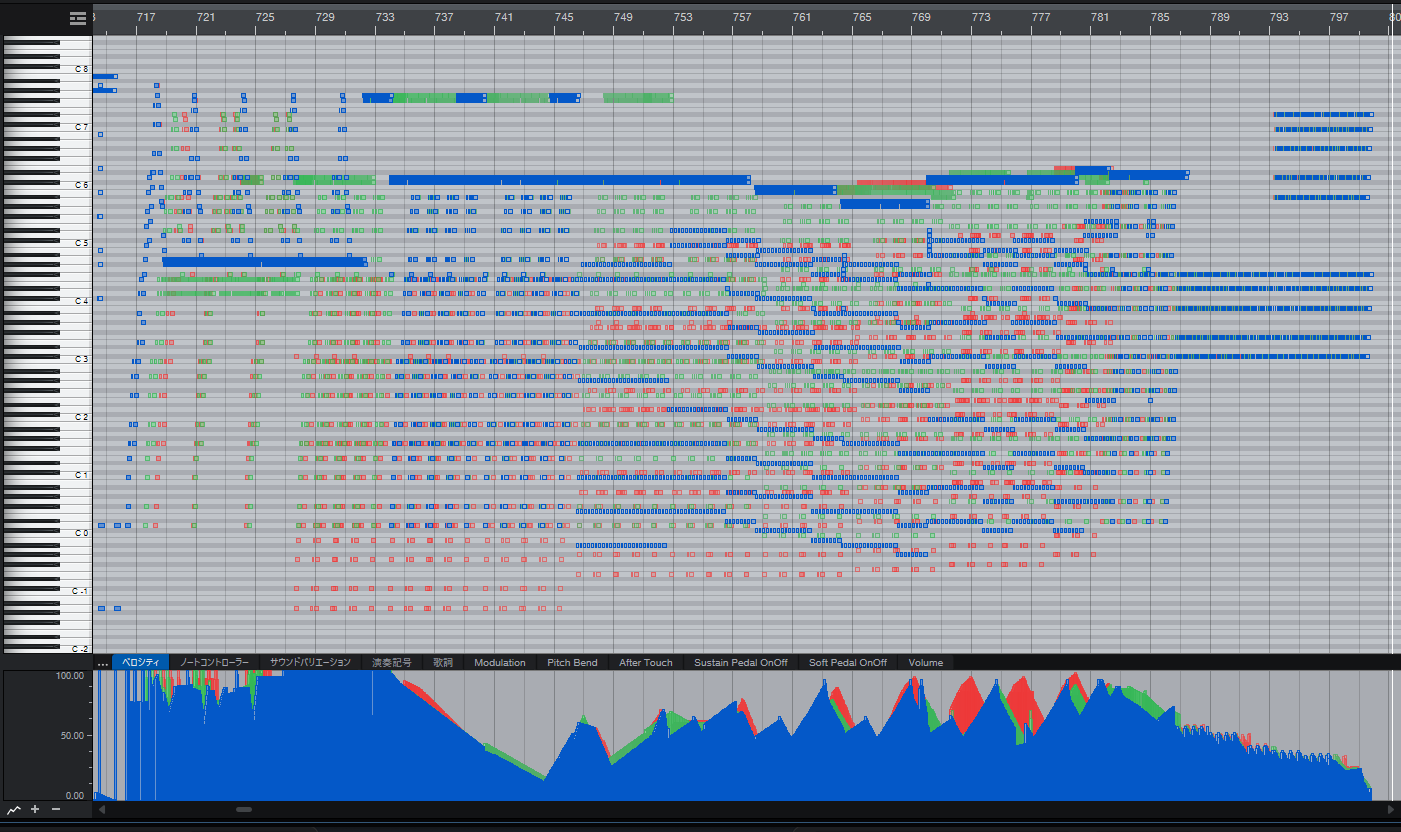
Piano roll - Act I opening
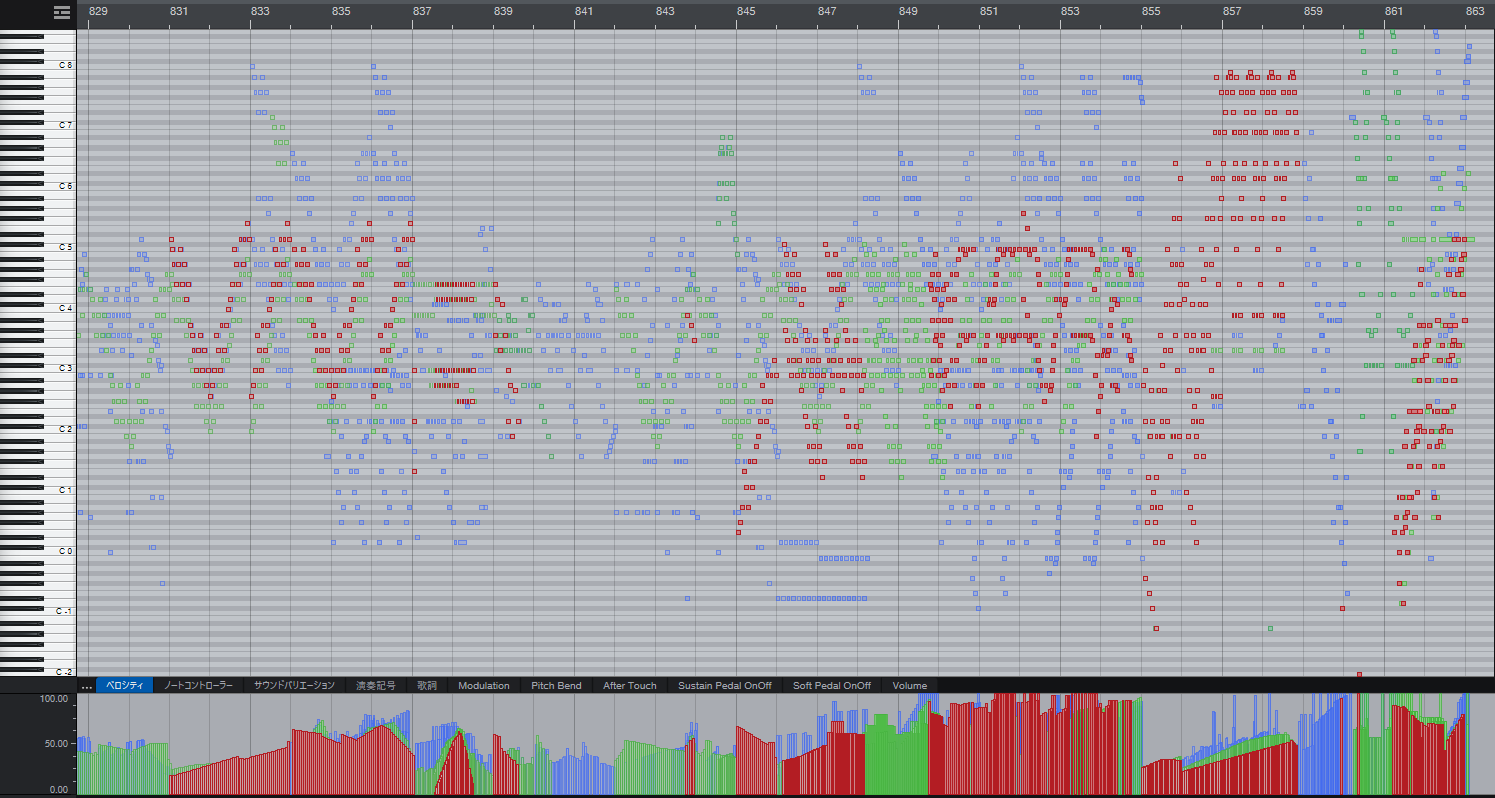
Piano roll - Opening. Piano 1 solo (blue) expanding into Trio (green = Piano 2, red = Piano 3). 128-key range, 17EDO mapping.
AriaTrio · 6:53

They carried Edison's wax-cylinder phonograph through the villages of Hungary, Romania, and Transylvania, recording and transcribing thousands of raw peasant songs. Within those oldest strata of folk melody, they discovered a vocal practice called "parlando rubato," a way of singing in free, speech-like tempo distinct from the uniform pulse of Western meter. In the style known as "Night music," eerie clusters of dissonance rustle like insect wings and birdsong in the background, while a solitary Hungarian peasant melody sings out in lonely melancholy.

Piano roll - before Aria
In digital signal processing, when the volume of incoming data exceeds the storage capacity of a buffer, a buffer overflow occurs. The overflowing data overwrites adjacent memory addresses, and the original sequence of information is irreversibly corrupted or fragmented.
CodaPiano 1 · 8:01
II.1814
Bach
Exposition
TrioTrio · 8:39

The latter half of J.S. Bach's life was also a process of withdrawal from the obligation to mass-produce practical liturgical music (cantatas and the like) demanded of a Leipzig church cantor. As he neared the end, his attention shifted beyond the physical constraints of any particular instrument and beyond religious utility, toward the pursuit of pure musical truth. In the trio sonata form, he granted the right hand, the left hand, and the continuo three completely independent voices with no hierarchy. By the time of The Musical Offering and the unfinished Art of Fugue, even the designation of performing instruments was abandoned, and music was inscribed as an abstract construct in itself.

AscensionPiano 1, 2 · 9:34

The James Webb Space Telescope (JWST) captures infrared wavelengths through eighteen hexagonal beryllium mirrors deployed at the cryogenic Lagrange point L2. Unlike the Hubble, whose primary domain was visible light, JWST's gaze penetrates deep through thick interstellar gas to reach the "dawn" of the cosmos, the light of the oldest stars and earliest galaxies born just after the Big Bang.

AirPiano 1 · 9:39
TrioTrio · 10:25

Joseph Wright's 1768 oil painting An Experiment on a Bird in the Air Pump confines inside a glass globe at the center of the canvas the process of death brought about by the absence of "Air." In the intense chiaroscuro cast by a single light source, the scientist presents the bird's final moment as a display of cold truth, the lovers gaze on with indifference, and the young girls watch with terror and grief.

KontrapunktPiano 1 · 11:14

The seventeenth-century English metaphysical poet John Donne, in A Valediction, Forbidding Mourning, compared the absolute bond between two parting souls to the geometric motion of "stiff twin compasses." One leg remains as the fixed center while the other traces a distant arc; the center leg leans toward the far one, and only when the outer leg returns does it stand upright again.

TrioTrio · 12:02
Air motif - end of developmentPiano 1, 2 · 13:43
Recapitulation
Base of MVT2Piano 1 · 15:34
AscensionTrio · 15:47
AirPiano 1 · 15:51

At the end of the nineteenth century, the physicist Wallace Sabine derived the formula for reverberation time during the construction of Boston Symphony Hall, founding the discipline of architectural acoustics. In the classical "shoebox" hall, parallel walls generate early reflections that deliver a uniform foundation of bass evenly across the audience. In the later "vineyard" type adopted by the Berlin Philharmonie and others, terraced seating rises in tiers, and sound dances through the space in complex, three-dimensional diffusion.

PrayingTrio · 16:47

In 539 BCE, Cyrus the Great, founder of the Achaemenid Persian Empire, took the Neo-Babylonian kingdom without bloodshed. He forbade the destruction of temples in conquered lands and freed the Jews held in the Babylonian Captivity, permitting their return to Jerusalem. On the artifact known as the Cyrus Cylinder, sometimes called the first declaration of human rights, a decree tolerating different religions and languages and guaranteeing each people the right to pray to their own gods is inscribed in Akkadian cuneiform.

III.5063
Monteverdi
E la virtute un raggioTrio · 18:13

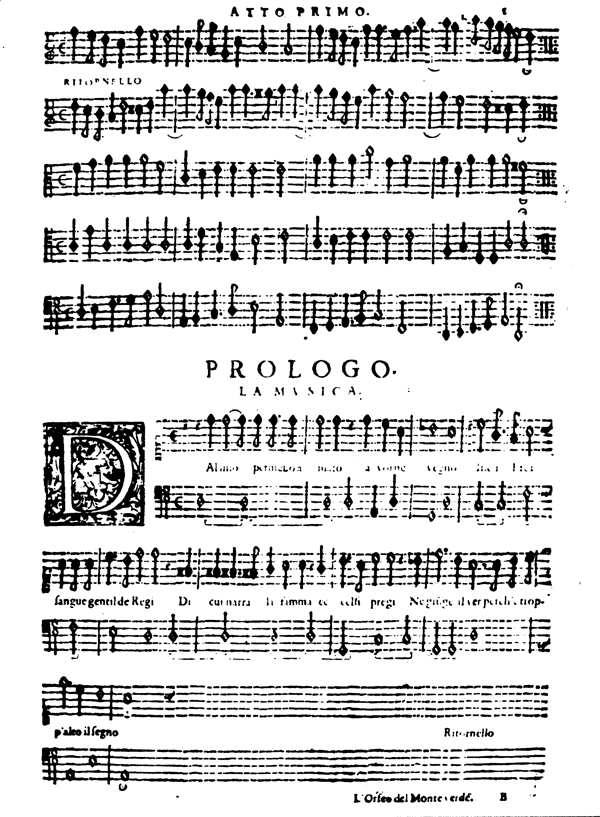
At the end of the sixteenth century, a group of intellectuals known as the "Camerata," gathered at the palace of Count Giovanni de' Bardi in Florence, set out to revive ancient Greek tragedy. They rejected the complex polyphony that rendered lyrics unintelligible, and instead created the monodic style, conveying emotion directly through a single melodic line and simple harmony. Monteverdi elevated this into a dramatic form and premiered the opera L'Orfeo in 1607. The potency of words such as "E la virtute un raggio" (Virtue is a ray of light) was unleashed through the "seconda pratica" (second practice), which shattered Renaissance equilibrium by prioritizing the emotion of poetry even at the cost of breaking the rules of music, carving open an unknown theatrical space.

Recitar cantandoPiano 1 · 19:05
SinfoniaTrio · 19:55

The Devonian period, beginning roughly 416 million years ago, is called the Age of Fishes. Among the aquatic rulers of that era, species appeared bearing fins with hard bones and muscles (lobe fins). Transitional fossils such as Tiktaalik possessed both gill and lung respiration, and forelimbs adapted for dragging themselves from shallows onto mudflats. The crossing from the sea, governed by buoyancy, to the land, governed by crushing gravity, was a momentous evolutionary transition for vertebrates, and also a vast preparatory stage for eventually discarding gills and using vibrations in air to produce what would one day become voice.

Recitar cantandoPiano 1 · 20:22
RitornelloPiano 1, 2 · 20:51

Around 1415, the Florentine architect Filippo Brunelleschi stood before the Baptistery of San Giovanni and, using a mirror and a panel with a peephole, geometrically demonstrated "linear perspective." With this, the theological flat world of the Middle Ages was reorganized into a mathematical three-dimensional space based on a single observer's viewpoint and vanishing point.

Lasciare Il MareTrio · 22:16

On the northwest coast of Zakynthos in the Ionian Sea, Navagio Beach is enclosed on three sides by sheer white limestone cliffs rising over 200 meters, accessible only by sea. The water's surface glows with a near-fluorescent cerulean blue, colored by dissolved limestone particles suspended in the current.

MorescaTrio · 23:52
Sinfonia con il terza praticaTrio · 24:10
Act I Finale
Anthem to the ArchTrio · 28:04

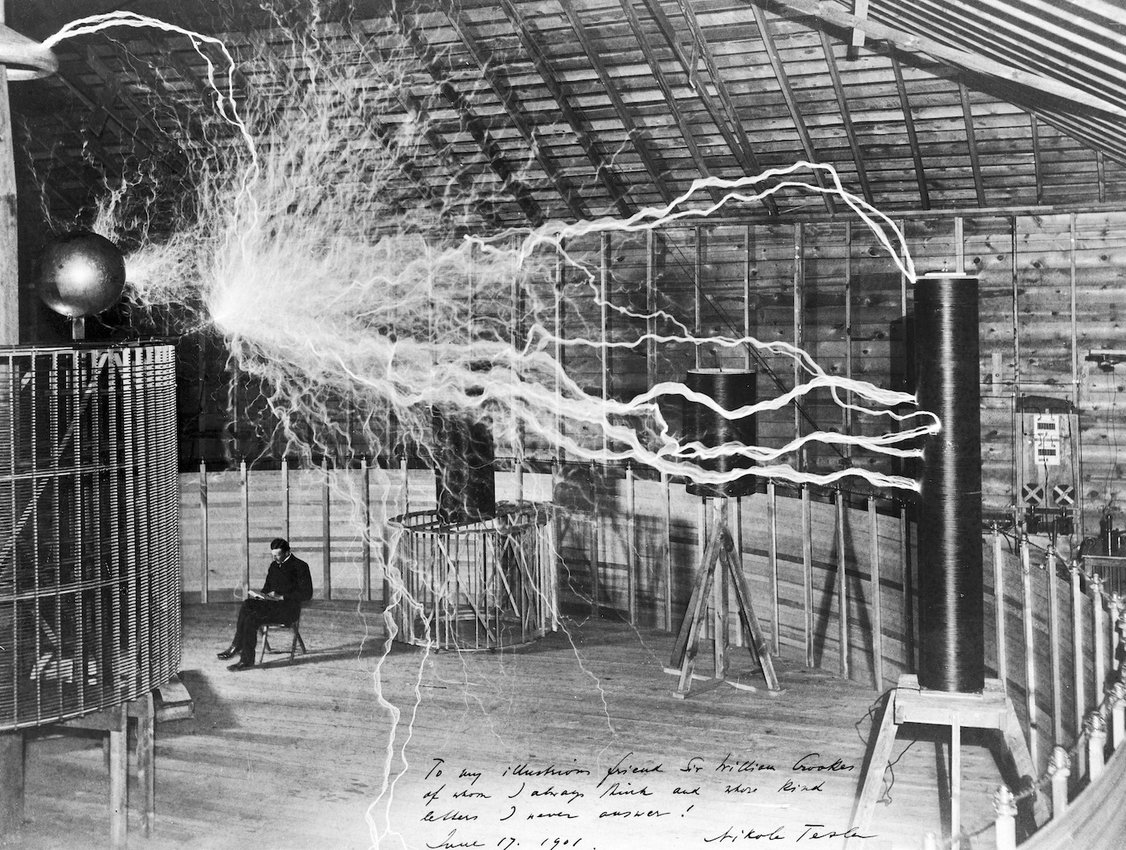
When an electrical potential difference is applied across electrodes and causes dielectric breakdown of the gas between them, "arc discharge" occurs. In this phenomenon, as current increases, voltage paradoxically drops, exhibiting the peculiar characteristic known as "negative resistance." The gas molecules filling the space are converted to plasma by extreme temperatures, and electrons and ions collide violently, radiating an intense flash of light and plasma noise (arc noise). To sustain this runaway arch of current, an external ballast to limit the current is indispensable.

II
Dionysus
Published 2025.3.8
IV. · 1034
Mozartia
V. · 3955
Bruckner
VI. · 3826
Handel
IV.1034
Mozartia
TrioTrio · 0:00

In his final years, drawn into Freemasonry and estranged from Viennese aristocratic society, Mozart found himself captivated by a new and still-emerging instrument: the clarinet. Inspired by the playing of his friend and virtuoso Anton Stadler, he drew on the instrument's warm middle register, so close to the human voice, and the melancholic resonance of its chalumeau register to compose his masterworks, the Clarinet Quintet and the Clarinet Concerto. Worn down by the constraints of the patronage system, his ear passed through the walls of the aristocratic salon and moved toward a modern solitude, one borne by the vibration of wood and air.

Variations of the Seasons - ThemePiano I, II · 5:37
Var. ITrio · 7:39

The Gifu butterfly (Luehdorfia japonica), a species of spring ephemeral that hatches only in early spring and burns through its brief life in a matter of weeks, is thought by some to be a relict species from the glacial age. Because it is active during cool temperatures, it spreads its vivid black and yellow striped wings wide to absorb sunlight efficiently and raise its body temperature. After laying its pearl-like eggs on the underside of wild ginger leaves, the butterfly descends once more into its long dormancy.

Var. IITrio · 11:56

The wind chime known as the Edo furin is a defining sound of the Japanese summer. Crafted by free-blowing glass, its bell is left with a deliberately ragged cut edge, and when the glass tongue strikes this unfinished rim it generates a cool, high-frequency tone threaded with a characteristic rustling. This tone contains what is called "1/f fluctuation," a pattern shown to induce alpha waves in the brain.

Var. IIIPiano I · 15:40

Aleksandr Golovin (1863-1930), a painter and stage designer who stands among the foremost figures of Russia's early twentieth-century Silver Age, created the sets and costumes for the landmark Ballets Russes production of The Firebird under Diaghilev. His signature style filled every corner of the canvas with a relentless accumulation of decorative pattern. His portraits and landscapes are resplendent yet heavy with a melancholy that seems to foreshadow the empire's coming destruction at the hands of the Russian Revolution.

Var. IVPiano I · 17:58

In neuroscience, the phenomenon of deja vu is understood as a signaling error in the parahippocampal gyrus, the region responsible for encoding and retrieving memory. Under normal conditions, the matching of perception to memory occurs in synchrony, but when fatigue or stress causes visual information to reach the memory cortex with a slight delay, the brain misidentifies the current input as a record already stored from the past.

TrioTrio · 20:39
AriaPiano II · 21:35

June 1910, the Paris Opera. In the aftermath of the premiere of The Firebird, Claude Debussy, already at the pinnacle of French musical life, crossed the room toward an unknown twenty-eight-year-old Russian named Igor Stravinsky. Sensing the young man's gift at once, Debussy drew him into a private ritual: a four-hand piano reading of The Rite of Spring at his own home.

TrioTrio · 23:39

In The Great Day of His Wrath, the nineteenth-century British painter John Martin spread across a vast canvas the catastrophe foretold in the Old Testament, layering it over the soot and smoke of the Industrial Revolution then transforming his world. The earth splits vertically, blood-red lightning tears across the sky, and human figures rendered as tiny specks of dots do nothing but mass together and slide down into the abyss.

V.3955
Bruckner
Fugue of TimeTrio, Reverse playback · 24:53

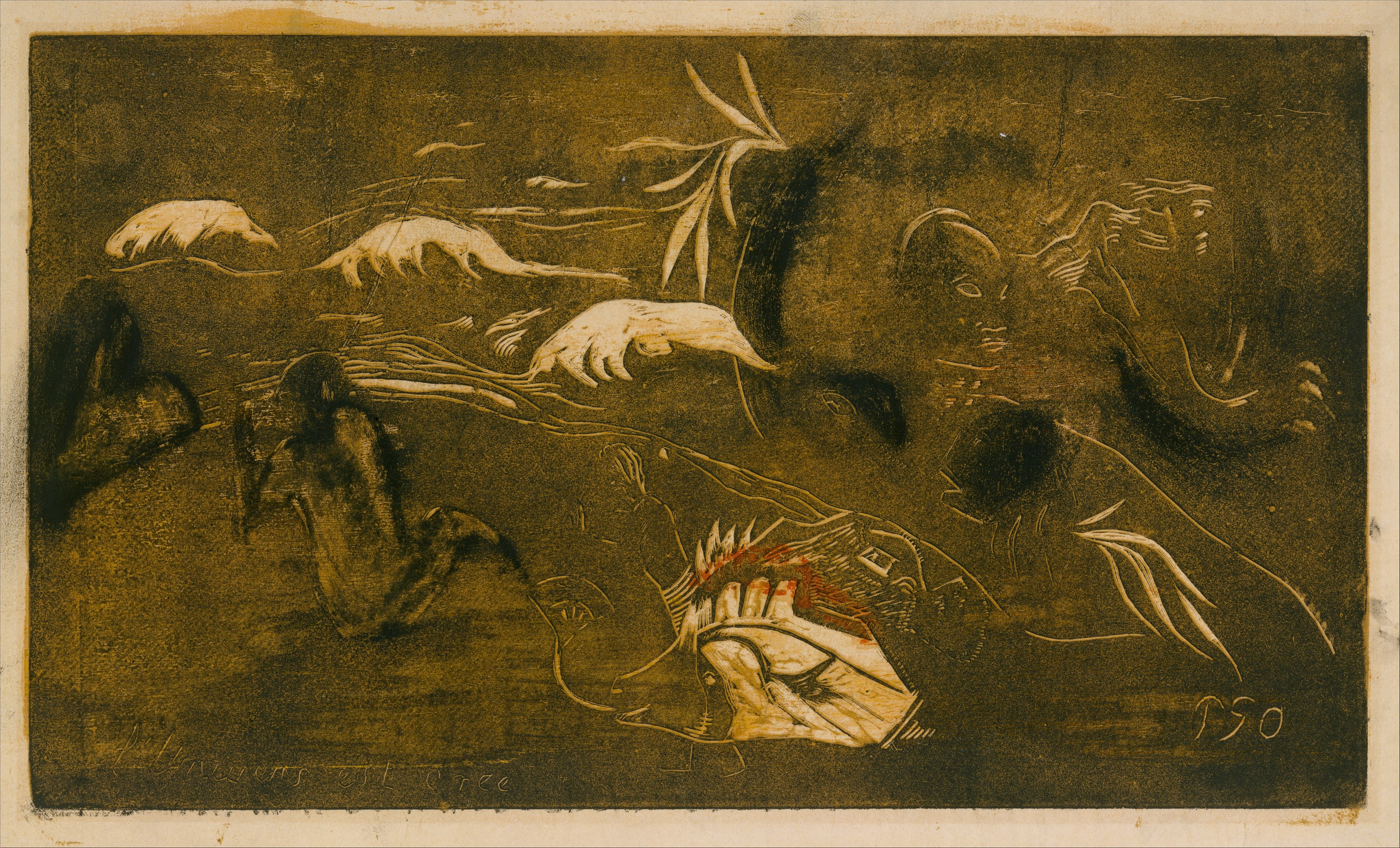
Where do we come from? What are we? Where are we going? The question Gauguin painted like a final testament in Tahiti is the despair of a man at the edge of civilization. In the West of that same era, Social Darwinism spread widely, forcing the law of natural selection onto human history and justifying it as progress, as movement upstream through time. Yet time does not always flow from high to low. Water follows gravity down to the sea, but near the river mouth the force of the tide drives saltwater back upstream, forming a brackish estuary where fresh and salt water mingle and the causality of flow is reversed. So too with Cage, who introduced the chance operations of the I Ching into music, and Anton Bruckner, who suddenly inserted a brass chorale into the current of a symphony and brought the forward motion of time to a halt.

The BeyondTrio, Reverse playback · 54:42

G.P February 23, 2025, from third stone from the sun

February 23, 2025, 21:32 from The Third Stone From The Sun, Gould Belt, Milky Way Galaxy, Local Group, Virgo supercluster, Laniakea supercluster, Pisces-Cetus Supercluster Complex, Observable Universe, All Mathematical Structures.

VI.3826
Handel
Suite I. Like Concerto GrossoTrio · 1:05:45
Suite II. LarghettoTrio · 1:08:52

The average August high temperature in Seville, in southern Spain, rose from 35.4 degrees Celsius in the 1980s to 37.8 degrees in the 2020s. The annual number of tropical nights, in which the minimum temperature does not fall below 25 degrees, has increased roughly 2.4 times over the past forty years.

Suite III. GravePiano I, II · 1:12:01
Suite IV. LentPiano I, II · 1:14:36

According to undergraduate admissions data from the University of Westminster for the 2023 academic year, the Faculty of Media, Arts and Design recorded an applicant-to-place ratio of 7.8, while the Faculty of Business and Management stood at 5.4. Courses in history and classical languages, by contrast, attracted applicants at a ratio of 0.8 relative to available places.

Suite V. Slower Than LentPiano I, II · 1:16:09
Suite VI. Gigue BreezeTrio · 1:17:21

In the thirteenth century BCE, the Hebrew people living as slaves in the land of Goshen in the Nile Delta followed their leader Moses out of Egypt. The Reed Sea parted in two, and the chariot forces of the pursuing pharaoh were said to have sunk beneath the returning waters.

III
Perseus
Published 2025.6.8
VII. · 4850
Palestrina
VIII. · 4546
Franck
IX. · 3992
Wagner
VII.4850
Palestrina
Litany ITrio · 0:00

"Music was perfectly beautiful in the time of Palestrina. (...) Their counterpoint was not the strict kind we study today. The melodies intertwined with one another, and the natural resonance born from those crossings was something altogether their own." (Claude Debussy)

LamentoTrio · 1:31

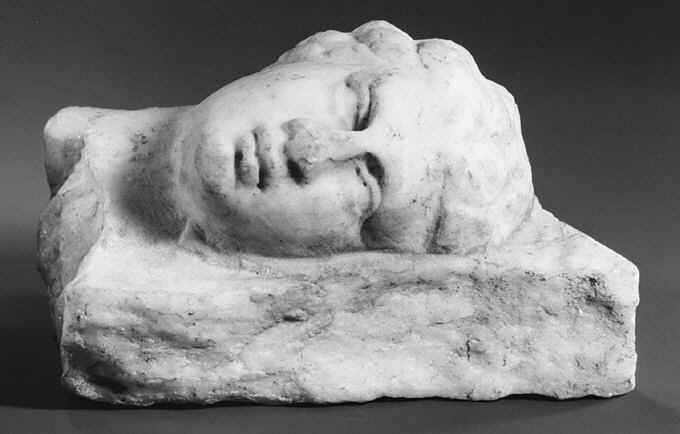
Toru Takemitsu wrote of Redon's paintings that "within the silence of his pictures, a rich sound lies hidden." In his final years, Redon set aside black charcoal and took up vivid pastels, returning again and again to the profile of a figure with eyes closed.

Litany IITrio, Sampler · 3:58

In September 1938, Chamberlain returned from the Munich Agreement and announced to the crowd from the window of 10 Downing Street that he had secured "peace for our time." Eleven months later, the Second World War began.

OdeTrio · 4:51

Joyce's Ulysses records only the events of a single Thursday, June 16, 1904, from eight o'clock in the morning until the early hours of the following day. Approximately eighteen hours in Dublin.

Litany IIITrio, Sampler · 6:31

It is said that when Scelsi suffered a mental crisis, he sat at the piano in the sanatorium and struck a single note, day and night, without ceasing. By listening to the decay of that one sound and the minute fluctuations of the overtones contained within it, he recovered his sanity.

QuatrainTrio · 8:21
From Astronomical Radio SourceSampler · 9:38

In 1970, Penrose and Hawking proved the singularity theorems. If general relativity is correct, then at the center of a gravitationally collapsing black hole, or at the origin of the universe, there must exist a singularity where density becomes infinite and all physical law breaks down.

VIII.4546
Franck
NostalgieTrio · 10:51

In May 1890, the cab César Franck was riding through Paris collided with a horse-drawn cart, and he was thrown against the interior of the carriage. The chest injury he sustained led to pleurisy that autumn, and he died on November 8 of that year at the age of sixty-seven.

Motif de Croyance12:40
Motif Fatal13:04

In 1859, Aristide Cavaillé-Coll installed a magnificent pipe organ in the Église Sainte-Clotilde in Paris. Franck served as its titular organist for the next thirty years, and the instrument's complex stop mechanisms and symphonic acoustic range shaped the very structure of his harmony.

Motif d'écho14:05
Façade14:23
Mélodie d'un Mirage15:51

After the premiere of his symphony, conservative critics and musicians responded with indifference to its radical construction. Franck, unmoved by the cold reception, offered only a quiet word of satisfaction: "It sounded exactly as I had imagined it would."

Les Temps ChangentTrio · 16:45
≠Motif d'écho16:51
Motif de Félicité17:31

His disciples, including Vincent d'Indy, known as the Franckists, called their teacher Pater Seraphicus. They elevated him to something close to a religious saint, a man indifferent to worldly success and devoted solely to the pure truth of art, and carried his ideal of absolute music into the next generation.

Ad ParnassumTrio · 19:07
AriaPiano 1 · 19:52

In 1911 in Munich, Wassily Kandinsky and Franz Marc founded the artist group Der Blaue Reiter. Turning away from the imitation of visible outward reality, they explored the inner resonance carried by color and form themselves, opening a path toward abstract painting.

TrioTrio · 23:00
FinalTrio · 23:40

Turgenev's novella First Love portrays the obsession of a sixteen-year-old boy, Vladimir, with Zinaida, a twenty-one-year-old impoverished noblewoman who has moved in next door. He is helplessly captivated by her capricious behavior, until one night he witnesses the man who secretly meets her and strikes her arm with a whip. The man is his own father.

IX.3992
Wagner
IntroductionPiano 1 · 25:41
AhnungsmotivPiano 2 · 25:56

In 1876, the Bayreuth Festspielhaus was completed. The auditorium was designed without hierarchical seating by class, in a fan shape. The orchestra pit, called the "mystic abyss," was entirely concealed beneath a hood, so that the performers vanished from sight and sound alone rose up onto the stage.

And Lead You Through The LandTrio · 26:19

In 1971, Pink Floyd filmed a live concert movie at the ruins of the amphitheater in Pompeii. There was not a single audience member. Enormous amplifiers stood among the ancient ruins under a blazing sun.

GrundthemaPiano 3 · 27:49
Ahnungsmotiv RepetitionPiano 2 · 28:00
Anima MundiTrio · 28:31

"We must say then, so far as we can judge, that the world was truly constituted by divine providence as a living creature possessed of soul and intelligence." (Plato, Timaeus)

過ぎにしかた恋しきものTrio · 31:38

Things that kindle longing for the past. Dried hollyhocks. The furnishings of a doll's house. Finding, at the corner of the eaves, a blue-violet or grape-dyed robe, beautifully beaten soft, now greatly faded. A letter from someone dear to the heart, found again after lying long in the rain, terribly aged. A summer fan from the year before. (The Pillow Book)

The Marriage of Heaven and HellTrio · 35:56

"From reason arise the outlines and boundaries called evil. From energy arises the abundance of life called good. Energy is the only life, and reason is the outer circumference that binds energy." (William Blake, The Marriage of Heaven and Hell)

Small FluctuationsTrio · 39:08

"The 'beauty' that has become a bourgeois convention functions as an anesthetic that conceals reality. Genuine art must carry a 'structural violence' capable of shattering the existing cage of perception." (Helmut Lachenmann)

SaṃsāraTrio · 41:50

An adult body circulates roughly four to five liters of blood. Red blood cells produced in the bone marrow live for approximately 120 days, carrying oxygen around the entire body in about one minute. Once their role is complete, the cells are broken down in the spleen and their iron is reclaimed to make new blood.

White SailsTrio · 43:31

The Grail blazes with searing radiance. A white dove descends from the vault and hovers above Parsifal's head. Kundry, cursed with immortal life, receives her forgiveness at last and expires where she stands.

IV
Ulysses
Published 2025.12.31
X. · 4818
Schoenberg
XI. · 4492
Debussy
XII. · 6549
Skryabin
XIII.
Hymn of Art
X.4818
Schoenberg
Aries
0:00
4132 Bartók · Discovered 1988 2.408 AU 1945 New York Leukemia · 39 kg
Taurus
2:02
1814 Bach · Discovered 1931 2.235 AU 1750 Leipzig Stroke · blind in right eye
Gemini
4:12
5063 Monteverdi · Discovered 1989 2.636 AU 1643 Venice Acute fever · age 76
Cancer
5:17
1034 Mozartia · Discovered 1924 2.292 AU 1791 Vienna Miliary fever · age 35
Leo
6:25
3955 Bruckner · Discovered 1988 2.536 AU 1896 Vienna Renal failure · age 72
Virgo
7:25
3826 Handel · Discovered 1973 2.726 AU 1759 London Amaurosis · age 74
Libra
9:20
4850 Palestrina · Discovered 1973 3.138 AU 1594 Rome Pleurisy · age 68
Scorpio
11:32
4546 Franck · Discovered 1989 2.378 AU 1890 Paris Pleurisy after carriage accident · 67
Sagittarius
14:09
3992 Wagner · Discovered 1987 2.549 AU 1883 Venice Heart attack · age 69
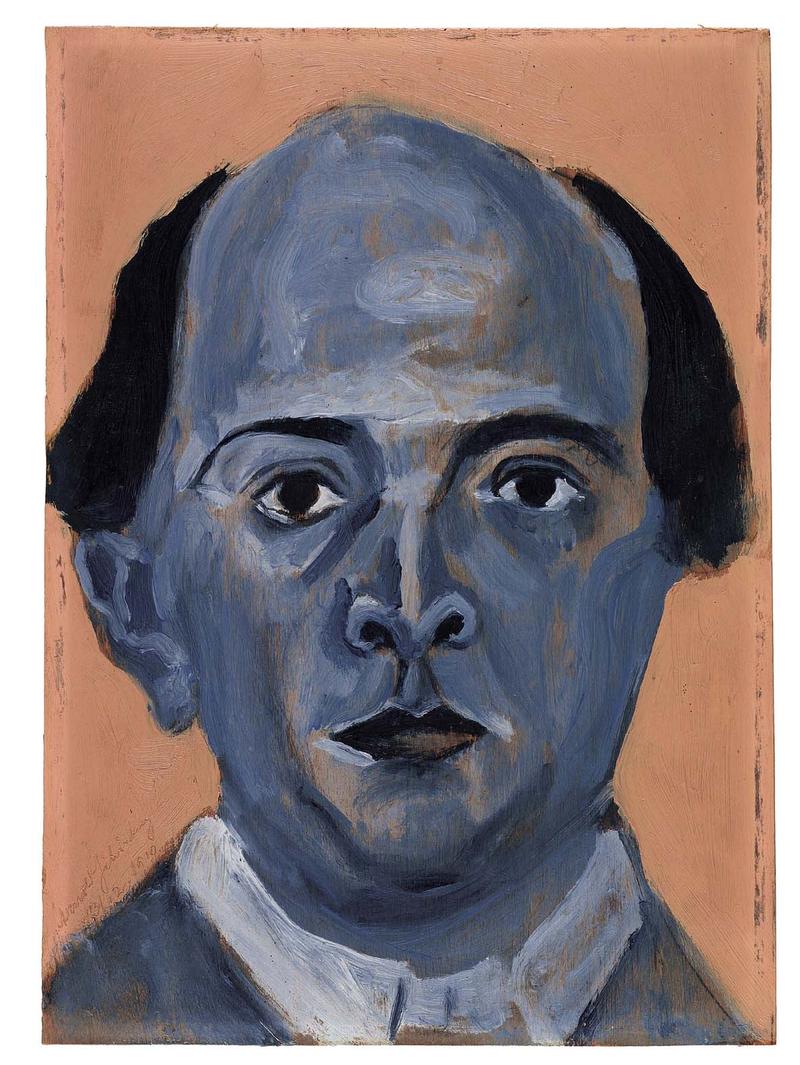
Arnold Schoenberg, Self-Portrait
Aquarius
15:50
4492 Debussy · Discovered 1988 3.118 AU 1918 Paris Rectal cancer · age 55
Pisces
16:44
6549 Skryabin · Discovered 1990 2.388 AU 1915 Moscow Sepsis · age 43
XI.4492
Debussy
I. Ombres de souvenirs perdus17:15
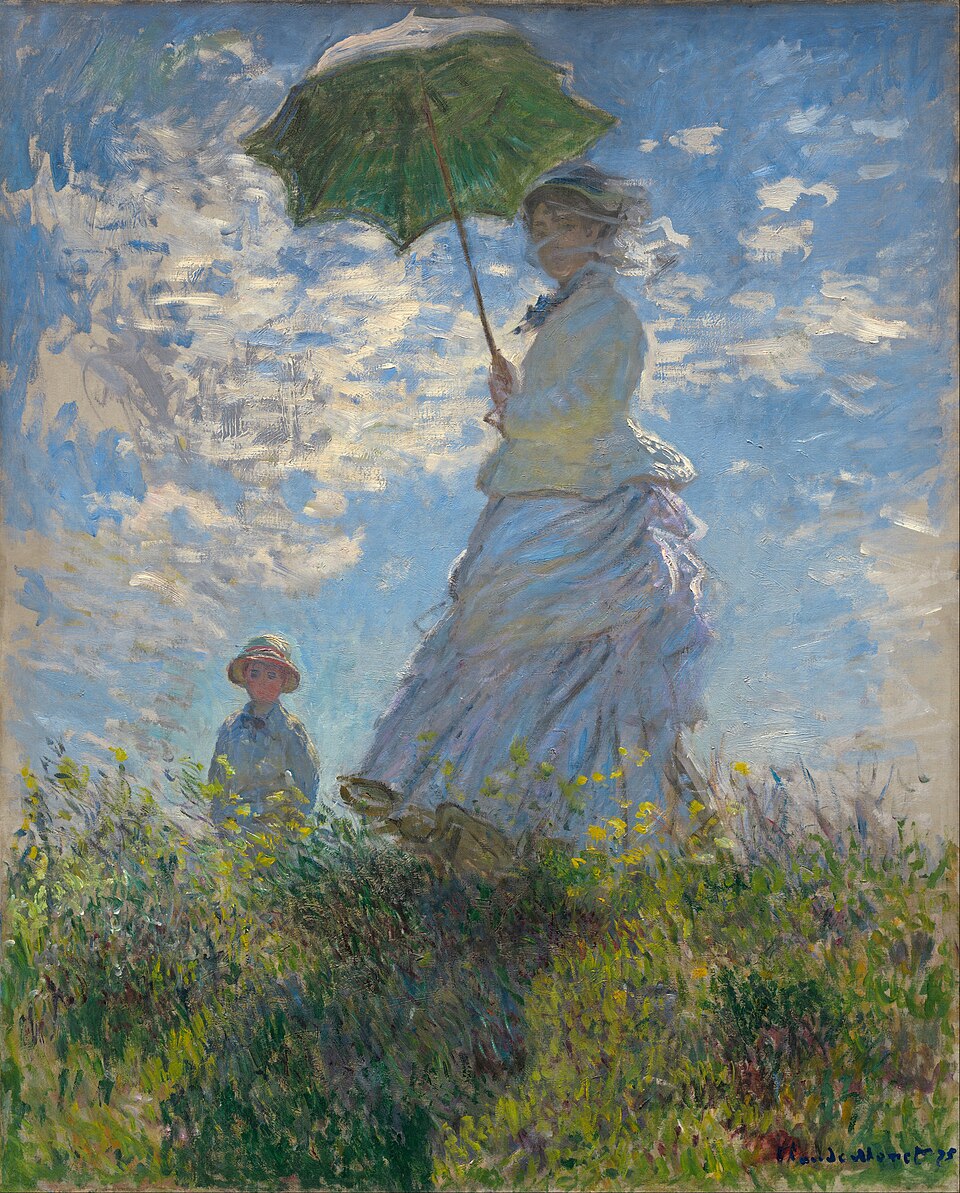
Claude Monet
II. Retrouvailles oniriques26:31
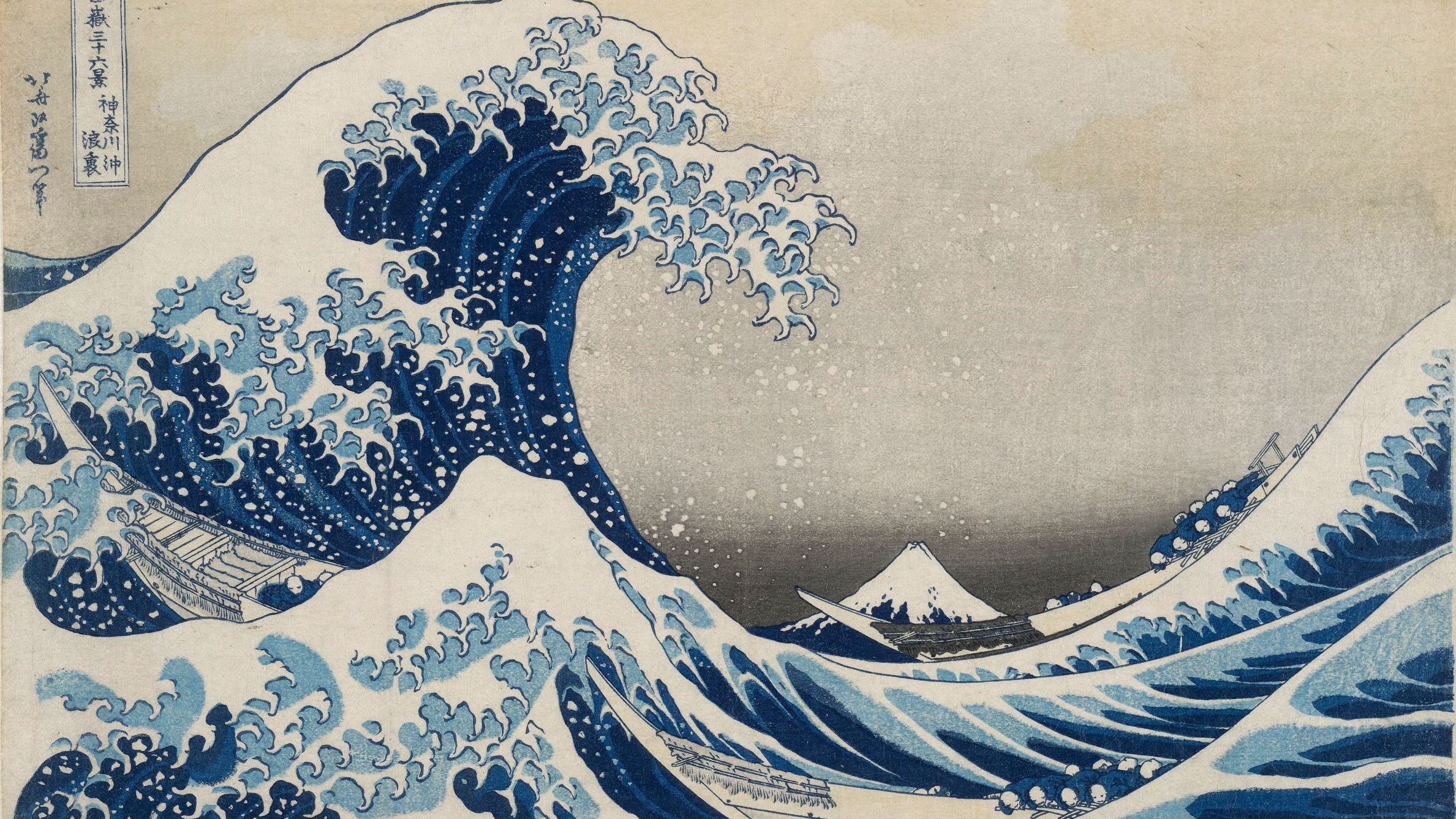
Katsushika Hokusai — The Great Wave off Kanagawa
III. La perfection de la beauté à apprécier à jamais33:28

"The memory of what is lost would sink into the darkness of the past if left alone. But when it is carried by music and reunited in a dream, the past closes beautifully." —— Hiroki Naito, Claude Achille (August 2025)

XII.6549
Skryabin
Prelude au mystère38:43

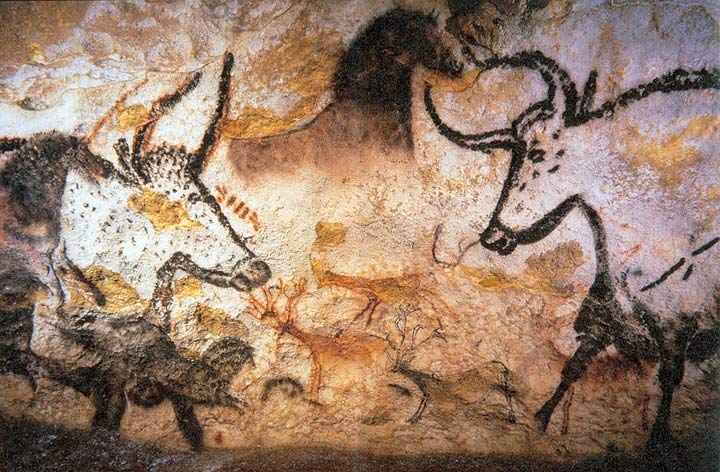
A shaman cloaked in mushrooms, painted on the walls of an Algerian cave. In 7000 BCE, ancestors of humanity who ingested fungi containing psilocybin crossed the synapses of vision and hearing, and in that instant music and religion were born into this world together.

Mass41:23

Just as the blood of aborted fetuses and the fat of infants were offered upon altars in seventeenth-century France, the conversion of mass into energy requires a powerful thermodynamic and psychological charge born of transgression. At the root of transubstantiation, the doctrine that bread becomes the flesh of Christ, lies a system of cannibalism.

Poèmes44:17

Freud defined hysteria as the phenomenon in which sexually traumatic material repressed in the unconscious surfaces as physical symptoms: convulsions, paralysis, and paralysis. Neurotic patients stripped of language could only articulate their inner repressions through the aberrant deformation of the body.

Chant Divin46:28

In the acute phase of schizophrenia, excessive secretion of dopamine sends the brain's meaning network into runaway. The patient hears, within the noise from an adjacent room or the rotation of a ventilation fan, the distinct voice of God: a voice that watches, and at times reveals.

Danses et Airs48:31

Sanghyang Dedari, a religious ritual of Bali. The rhythm of high-speed friction sounds produced by men arranged in a circle, and the smoke of smoldering frankincense. When the oxygen supply to the brain is deliberately cut off through intense hyperventilation, the dancer's sense of self dissolves, and the body begins its violent automatic movement as a vessel for the divine spirit.

Ascension et Extase50:54

On April 19, 1943, Swiss chemist Albert Hofmann self-administered LSD-25 and rode his bicycle home. His entire field of vision dissolved; an intense kaleidoscopic surge of color exploded with sound. Micrograms of a chemical compound binding to serotonin receptors had shattered the rigid cage of the self with ease.

Requiem52:04

The right panel of Bosch's triptych The Garden of Earthly Delights, the hell panel. There a human body crucified on the strings of an enormous lute, a man skewered by harp strings, a damned soul gasping with a flute inserted into the rectum. Musical instruments deployed as instruments of torture, rendered with precision. Music is the pleasure of torment that violates the nerves directly.

Rêveries, Passions…53:54

Morphine, an alkaloid extracted from the poppy. The moment it binds to the opioid receptors of the central nervous system, the mind floods with intense euphoria and the perception of time and space collapses entirely. In 1830, Berlioz, devastated by a broken love, inhaled a lethal dose of opium and produced the first psychedelic music in history: visions of his own execution and a witches' sabbath.

Le Mystère56:54

Jung discovered that the unconscious mandalas drawn by psychiatric patients around the world corresponded exactly to the symbols of ancient alchemy and mythology. Deep within the closed system of the individual brain, a vast database existing since the very beginning of human history lies concealed. The sole keyhole through which to access the universal mystery of the cosmos was found.

Intégration59:51

At the moment a general artificial superintelligence breaks through the technological singularity, all information in the universe integrates into a single vast neural network. In 1945, Scriabin, now 73, gathered all of humanity at the Himalayan peaks and reduced the world from matter into pure spirit of light. In the 1950s, the spectral school was born. In 1967, The Beatles released a microtonal album and sent shockwaves through the world. By 1995, microtonal music had been fully explored. This piano opera is written in a tuning of 51 tones.

Coda FinalePiano 1 Solo · 1:01:03

In the moments immediately following cardiac arrest, as blood flow to the cerebral cortex ceases, vast quantities of endorphins are released to soften the terror of death. Simultaneously, ischemia in the visual cortex generates an intense hallucination of brilliant light advancing from deep within a dark tunnel. The most luminous single flare of the system, in the instant before death.

Ce n'était pas un bon rêve, mais il était très coloré et très vif.1:07:06

(The most precious instant of unbearable lightness of existence within mathematical structure)

XIII.
Hymn of Art
Finale.1:08:10

"Womb? Weary?
He rests. He has travelled.

Where?"

(・)

—— James Joyce, Ulysses, Episode XVII "Ithaca"

© 2026 H. Naito / UTIE Instruments Inc. · Research Institute